
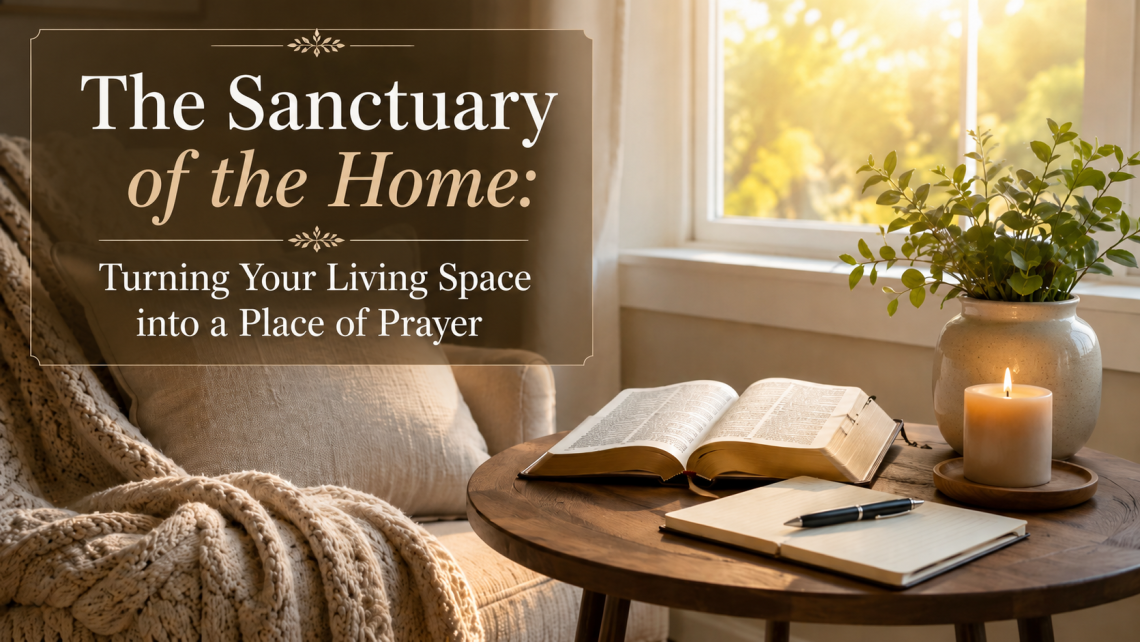
In our current culture, which is defined by a relentless pace and an unending stream of digital noise, the modern woman often feels as though she is holding her breath, waiting for a moment of quiet that never quite arrives. We are living in a year where the boundaries between the world and our personal lives have been completely erased by technology, leaving us feeling exposed and exhausted. Yet, there is a profound, holy longing within every woman of God to reclaim the space that she occupies. We are looking for ways to make our homes a true place of spiritual refuge, a sanctuary that does not just exist as a physical structure, but as a living, breathing house of prayer. This desire is not merely about home decor or aesthetic trends; it is about bringing the Word of God into the physical space so that it might shape the culture of our hearts and the atmosphere of our families. When we speak of the sanctuary of the home, we are talking about creating a small place, a space where the veil between the ordinary and the divine becomes delightfully, comforting.
Why the Home Has Become a Battleground for Peace
The primary reason this shift is so vital in 2026 is that our homes have become the primary battleground for our peace. If we do not actively cultivate an atmosphere of worship, the world will inevitably fill the vacuum with its anxiety, its demands, and its opposing values. We must realize that our homes are not just places to sleep, eat, and store our belongings; they are extensions of our spiritual lives, and in many ways, they function as the domestic church. When we bring the Verse of the Bible into our physical space, we are acknowledging that the Lordship of Christ is not confined to the church building on a Sunday morning. It is meant to inhabit the kitchen, the hallway, and the bedside table. It is meant to change the way we speak to one another, the way we handle conflict, and the way we rest at the end of a long day. This is the practical, lifestyle-oriented application of our faith that creates a highly shareable, contagious example of what it looks like to live out the Gospel in the everyday mundane.
Turning Daily Habits into Spiritual Rhythms
One of the most foundational shifts we must make is to view our daily habits as spiritual rhythms rather than just household chores. We must look at the small rituals that anchor our day in the truth of Scripture. Consider the morning rhythm. Before the phone is checked, before the calendar is consulted, and before the chaos of the day begins, we have the opportunity to set the spiritual tone. This might look like a simple, intentional moment where we open a Bible that is kept in a designated, and accessible place in the living room. By placing the Word physically in our path, we are reminding ourselves that we do not live by bread alone. This is not about achieving a perfect devotional life; it is about establishing a rhythm of reliance. It is the acknowledgement that unless the Lord builds the house, they labor in vain who build it.
Scripture Reflection: Psalm 127:1
Unless the Lord builds the house, They labor in vain who build it; Unless the Lord guards the city, The watchman stays awake in vain. — Psalm 127:1 (NKJV)
A Sanctuary Is Measured by the Presence of the Spirit
As a licensed minister, I have often encountered women who feel that their homes are failing because they are not perfectly clean or perfectly curated. I want to tell you today that the sanctuary of the home is not measured by the absence of clutter but by the presence of the Spirit. It is measured by the frequency of grace. If your home is a place where forgiveness is spoken quickly, where the Bible is loved, and where the presence of God is invited, then you have successfully built a sanctuary. The practical rhythm of the home should include table fellowship. The dinner table is perhaps the most overlooked altar in the modern Christian home. It is where we break bread and where we break down the walls that the world builds between us. When we gather to eat, we are not just refueling our bodies; we are fueling our relationships with gratitude. Including a simple prayer of thanksgiving, or perhaps reading a short passage of Scripture before the meal, this transforms a routine necessity into a holy act of communion.
The Daily Rhythm of the Home
The Daily Rhythm of the House
A spiritually grounded home is often shaped through simple, repeated practices. These small daily rhythms help turn ordinary moments into opportunities for prayer, gratitude, and awareness of God’s presence.
| Time of Day | Biblical Focus | Practical Ritual |
|---|---|---|
| Morning | Dedication | Begin the day by reading a short verse before checking your phone, opening email, or stepping into the demands of the day. This simple act helps set the tone of the home around God’s presence rather than pressure. |
| Midday | Mindfulness | Pause for a brief prayer over the people in your household, especially those who are away at work, school, appointments, or errands. This rhythm keeps the home spiritually connected even when everyone is physically scattered. |
| Evening | Gratitude | Before the day closes, reflect on where God showed His faithfulness, provision, patience, or protection. This could happen around the dinner table, during family prayer, or in a quiet moment before bed. |
This simple rhythm reminds us that a sanctuary is not built through perfection, but through repeated moments of surrender. When Scripture, Prayer, and Gratitude are woven into the ordinary flow of the day, the home slowly becomes more than a place of activity. It becomes a place of Peace, Remembrance, and Worship.
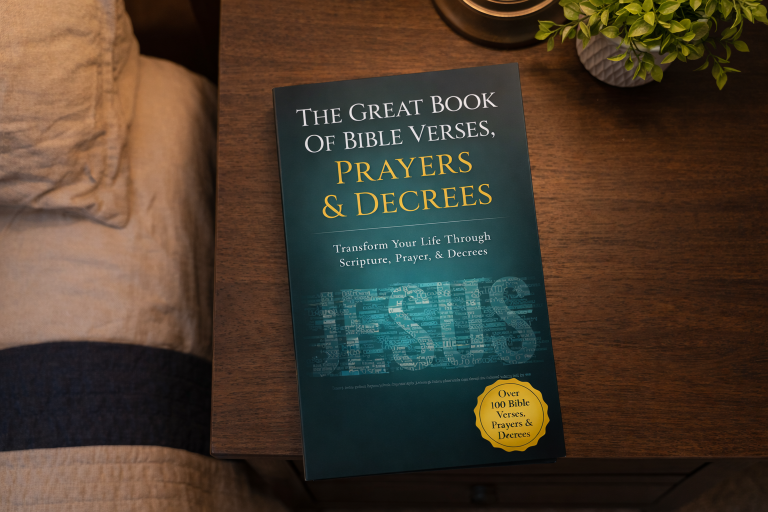
Check out: The Great Book of Bible Verses, Prayers & Decrees
Using Scripture as a Visual Anchor in the Home
Furthermore, we must address the importance of our physical environment as a testament to our faith. We often decorate our homes with symbols that reflect our taste, but how often do we decorate them with symbols that reflect our theology? Consider the placement of Scripture in your home. It should not just be in a tucked-away study, but in the high-traffic areas where life happens. Placing a framed verse in the entryway reminds everyone who enters, including yourself, that they are stepping into a space dedicated to the Lord. It serves as a visual anchor, a constant reminder of the covenant you have made with God regarding your household. This is a practice rooted in the ancient tradition of God’s people.
Scripture Reflection: Deuteronomy 6:6-9
And these words which I command you today shall be in your heart. You shall teach them diligently to your children, and shall talk of them when you sit in your house, when you walk by the way, when you lie down, and when you rise up. You shall bind them as a sign on your hand, and shall be as frontlets between your eyes. You shall write them on the doorposts of your house and on your gates. — Deuteronomy 6:6-9 (NKJV)
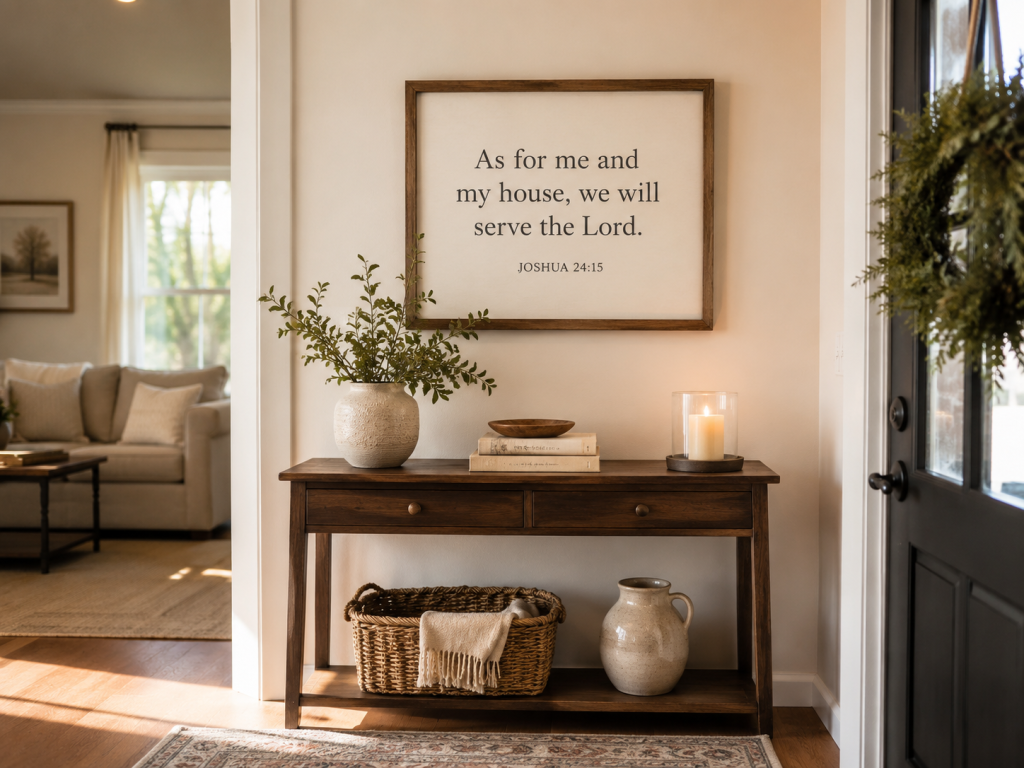
Writing the Word on the Doorposts of Daily Life
This scripture is not an ancient suggestion; it is a blueprint for holiness. By writing the Word on our doorposts, we are declaring that this space belongs to the Most High. This practice acts as a spiritual deterrent to the chaos of the world. When we see the Word, we are reminded of our allegiance. It recalibrates our hearts when we are tempted to be angry, impatient, or selfish. It is a tool for spiritual warfare in the most literal sense. When the atmosphere of the home is saturated with the Word of God, it becomes difficult for the spirit of anxiety to gain a foothold.
Cultivating Silence in a Noisy Age
Another vital aspect of the sanctuary of the home is the cultivation of silence. In 2026, we are bombarded by constant auditory and visual stimuli. We have televisions, smart speakers, and notifications pinging us from every direction. Creating a space where silence is valued is a counter-cultural act of defiance against the spirit of the age. It may mean designating a specific time in the evening where the screens are turned off, and the noise of the world is replaced by the music of the Spirit or simply the peaceful quiet that allows us to hear the still, small voice of God. This silence is not empty; it is expectant. It is an invitation for the Holy Spirit to move in our living rooms and bedrooms.
Avoiding the Trap of Spiritual Perfectionism
We must also be careful not to let the pursuit of a sanctuary become another item on our checklist of perfectionism. The enemy is very clever; he will take the beautiful desire to honor God with our homes and turn it into a source of guilt because our homes do not look like the ones we see on social media. Please hear my heart on this: God is not interested in your staged photos. He is interested in your surrendered heart. If your children are running around, if the laundry is piled up, and if the meal is simple, you are still fully capable of creating a sanctuary. A sanctuary is defined by the posture of the people, not the perfection of the property. The grace of God covers our messes. The blood of Christ cleanses our homes from the pride of performance. Let us seek to build a home that is known for its warmth rather than its tidiness.
Scripture Reflection: Colossians 3:16
Let the word of Christ dwell in you richly in all wisdom, teaching and admonishing one another in psalms and hymns and spiritual songs, singing with grace in your hearts to the Lord. — Colossians 3:16 (NKJV)
The Four Pillars of a Sacred Space
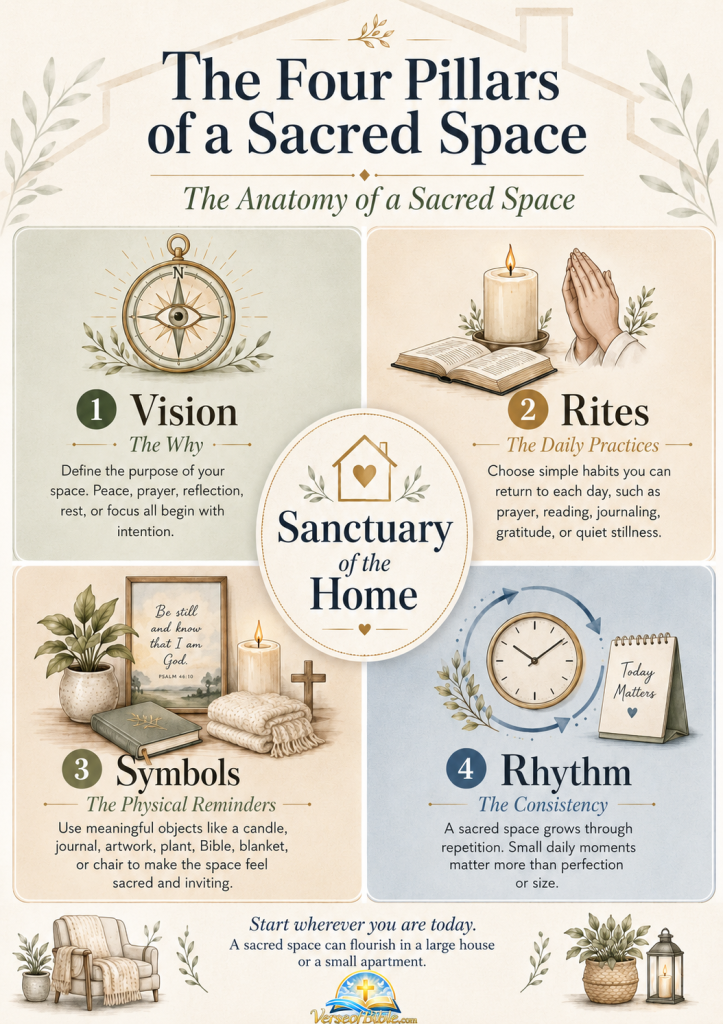
Building a Refuge That Sends Us Back into the World
Ultimately, the goal of creating a sanctuary is to prepare us to be sent out. We do not build a refuge so that we can hide from the world forever. We build a refuge so that we can be replenished, restored, and re-sent to be light in a dark place. Our homes are meant to be a training ground for the Kingdom of God. When we learn to love well within our own four walls, we become better equipped to love the world outside those walls. We become carriers of the presence of God. When people enter our homes, they should feel a shift in the atmosphere. They should feel that they have stepped into a space where the Gospel is not just talked about, but lived.
One Small Step Toward a Home Filled with God’s Presence
This is the promise that is available to every woman who chooses to make her home a sanctuary. It is the promise that the presence of the Lord will be the covering for her household. It is the promise that even in the midst of a chaotic world, there is a place of peace, a place of prayer, and a place where the Word of God is given the final word. I encourage you today, sister, to take one small step. Put up one verse. Start one rhythm. Invite the Lord into the ordinary moments of your day. You are building a sanctuary that will leave a legacy for generations to come.
Frequently Asked Questions About Creating a Sacred Space at Home
How do I create a sacred space at home?
Creating a sacred space at home begins with intention, not perfection. Choose one area where you can regularly pause, pray, read Scripture, or sit quietly with the Lord. This could be a chair by a window, a bedside table, a corner of the living room, or even a small spot at the kitchen table. Add simple reminders of faith, such as a Bible, a prayer journal, a candle, a framed verse, or a worship playlist. The goal is not to create a staged or flawless space, but to establish a place where your heart is gently drawn back to God.
Can a small apartment become a spiritual sanctuary?
Yes, a small apartment can absolutely become a spiritual sanctuary. A sacred home is not measured by square footage, expensive decor, or perfect organization. It is shaped by the presence of God, the rhythm of prayer, and the way Scripture is welcomed into everyday life. Even one small shelf, one chair, one framed verse, or one quiet morning habit can help transform an ordinary apartment into a place of peace and prayer.
What Bible verses are good for the home?
Some of the most meaningful Bible verses for the home are verses that speak of God’s presence, peace, protection, wisdom, and faithfulness. Psalm 127:1 is a powerful reminder that unless the Lord builds the house, our labor is in vain. Deuteronomy 6:6-9 beautifully reminds believers to keep God’s Word present in the daily life of the household. Joshua 24:15 is also a beloved choice for entryways and living spaces: “As for me and my house, we will serve the Lord.”
How can I make my home feel more peaceful spiritually?
To make your home feel more peaceful spiritually, begin by creating small rhythms that invite God into the ordinary parts of the day. Read a short verse before checking your phone in the morning. Pause for prayer during the day. End the evening with gratitude. You can also reduce unnecessary noise, place Scripture where it will be seen often, and create moments of silence where your household can slow down and listen for the Lord’s voice. Peace grows through repeated acts of surrender.
Does my home have to be perfectly clean to be a sacred space?
No, your home does not have to be perfectly clean to be sacred. A Christian home sanctuary is not defined by spotless counters, curated decor, or social media perfection. It is defined by the posture of the people who live there. If your home is a place where Scripture is honored, forgiveness is practiced, prayer is welcomed, and grace is extended, then God can meet you there in the middle of real life.